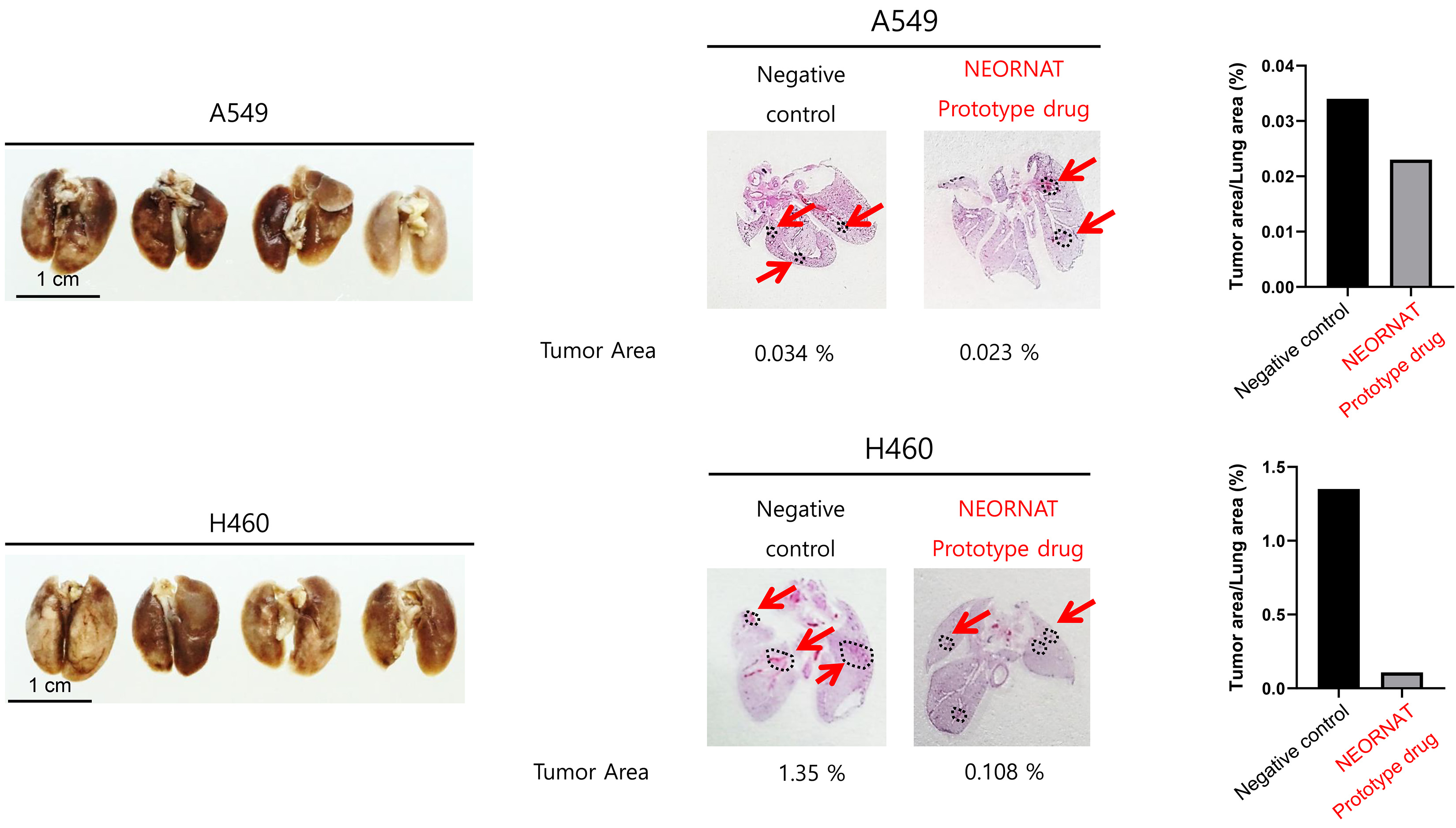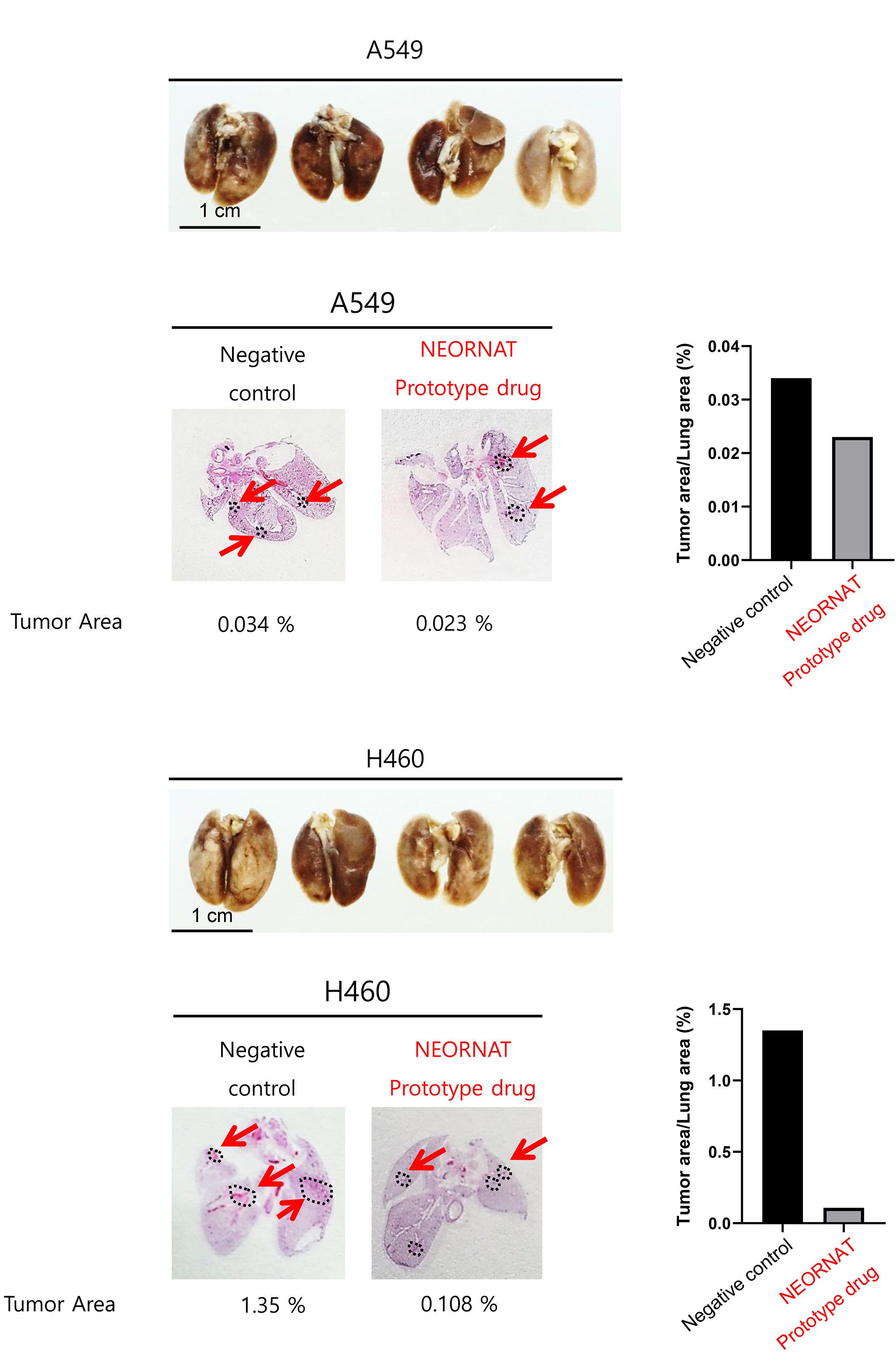
Pipeline
NRT-YHD
Macrophage immune-check point inhibitor
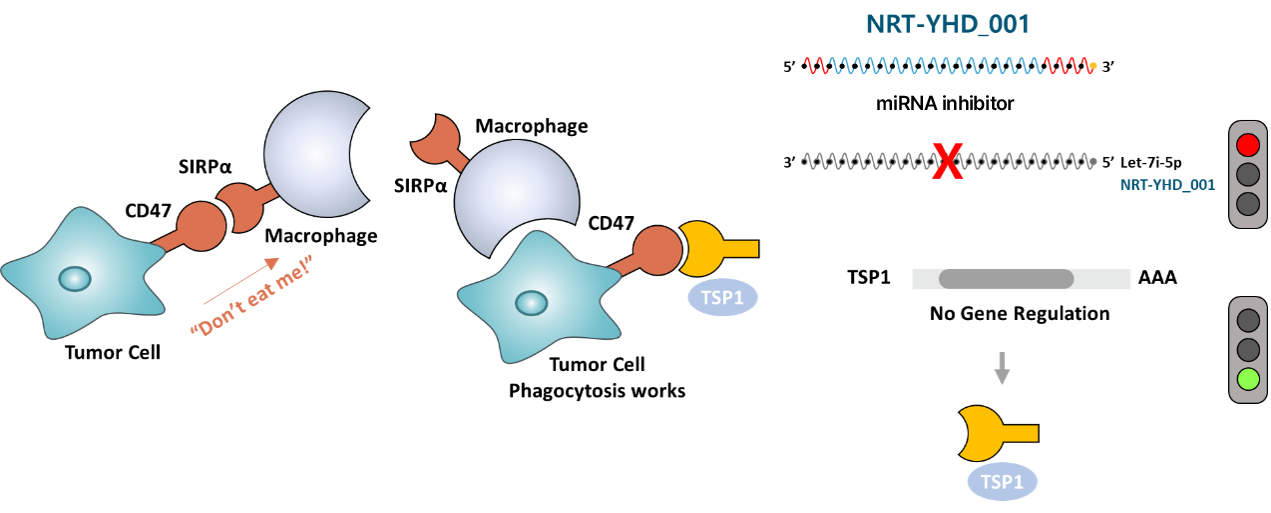
The let-7i-5p suppresses host macrophage immune surveillance by inducing the CD47-SIRPα-mediated “don’t eat me” signal. Based on new concept of macrophage immune regulatory mechanism, we are developing a first-in class RNA immunotherapy that activates macrophages by recovering potent endogenous tumor suppressor TSP1 via specific inhibiting let-7i-5p miRNAs in liver cancer cells.
NRT-YHD specifically inhibits let-7i-5p miRNA, which suppresses macrophage immunity (Don't eat me signal) during hepatocellular carcinogenesis, thereby allowing macrophages to elicit phagocytosis (Eat me signal) against liver cancer cells. In the development of liver cancer, oncomiR let-7i-5p suppresses translation of the THBS1 gene, thereby interfering in the governance of therombospondin-1 (TSP1) in the growth, proliferation, angiogenesis, and metastasis of liver cancer. This activation of macrophages is also expected to become an anticancer drug that can fundamentally remove cancer cells by activating the adaptive immune cells such as T-cells in tumor microenvironment.
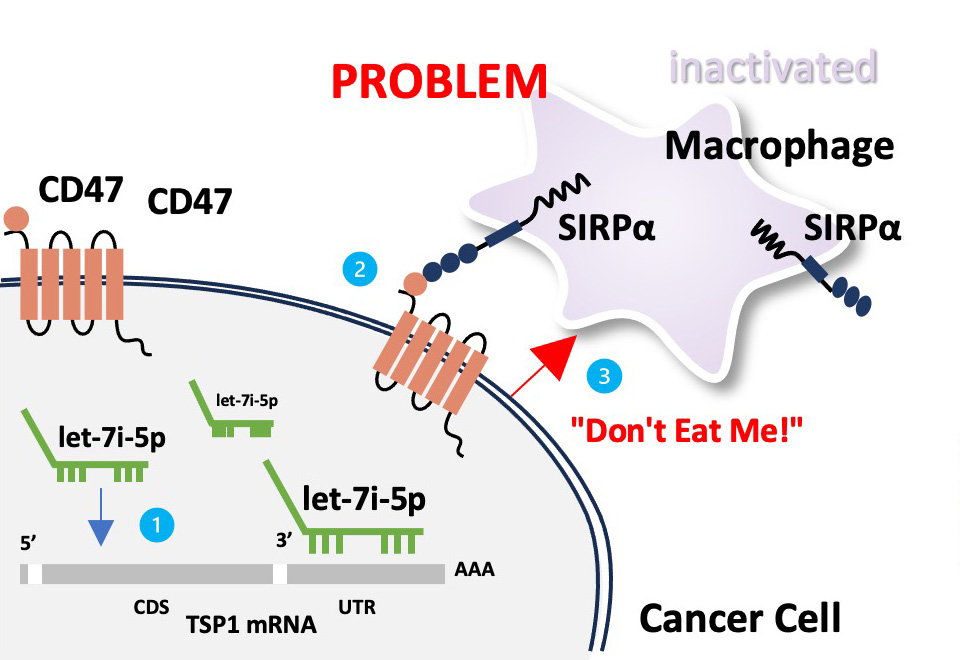
1) let-7i-5p miRNA suppresses translation of TSP1 mRNA, which leads to 2) the recognition of CD47 by SIRPα, activating the 3) "Don't Eat Me" signal of cancer cells.
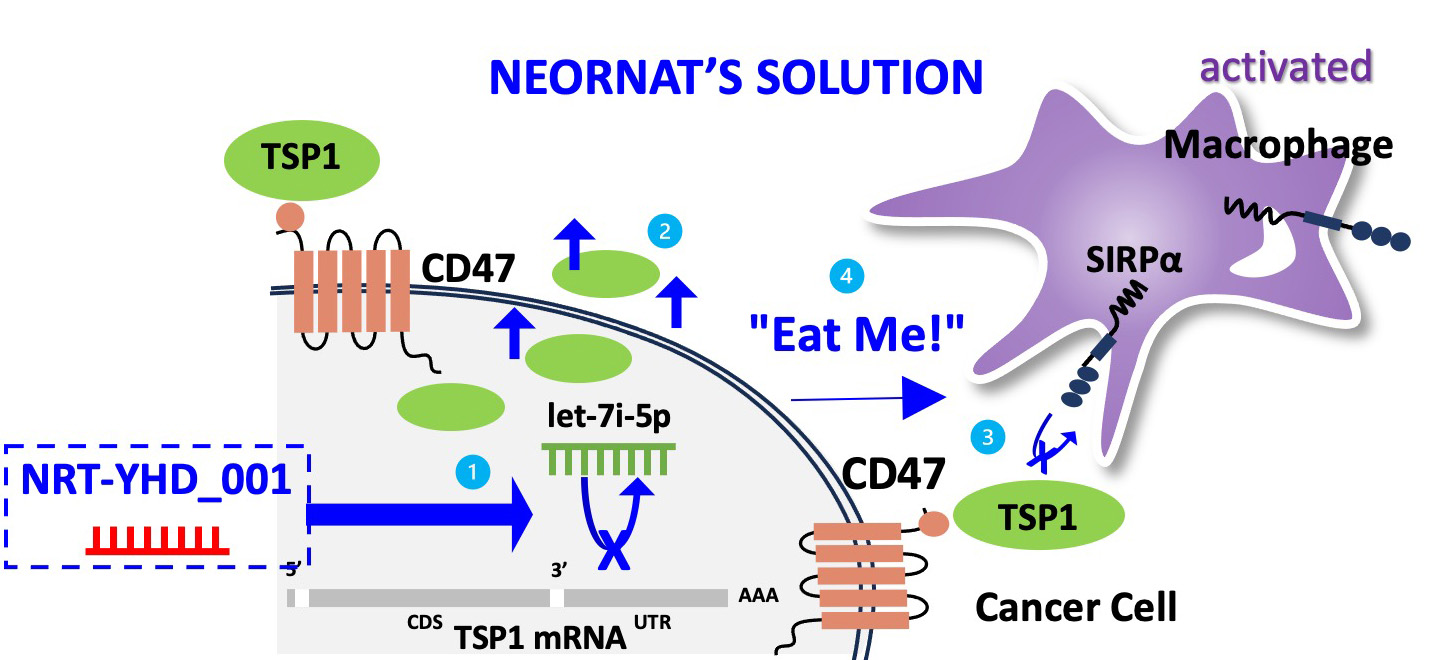
1) NEORNAT's 'NRT-YHD_001', an antisense miRNA for let-7i-5p, 2) restores translation of TSP1 which 3) inhibits interactions between CD47 and SIRPα. This 4) activates "Eat Me" signal for macrophage to eliminate cancer cells.
1. NRT-YHD_001 : RNA agent for Liver cancer with treatment RNA preparation with anticancer action of NRT-YHD mechanism
NRT-YHD_001 is an RNA liver cancer treatment pipeline with the mechanism of NRT-YHD. It restores the production of TSP1 in liver cancer tissue, binds TSP1 to CD47 of cancer cells, and activates macrophages to treat liver cancer. NRT-YHD-001 is an RNA liver cancer treatment pipeline with the mechanism of NRT-YHD. It restores the production of TSP1 in liver cancer tissue, binds TSP1 to CD47 of cancer cells, and activates macrophages to treat liver cancer. It is a drug that solves the problems of stability and tissue selectivity, which are problems with antisense RNA therapeutics, and has a high anticancer effect on liver cancer.
Efficacy & Key Data
In vivo Therapeutic Efficacy Test, Weekly Injection
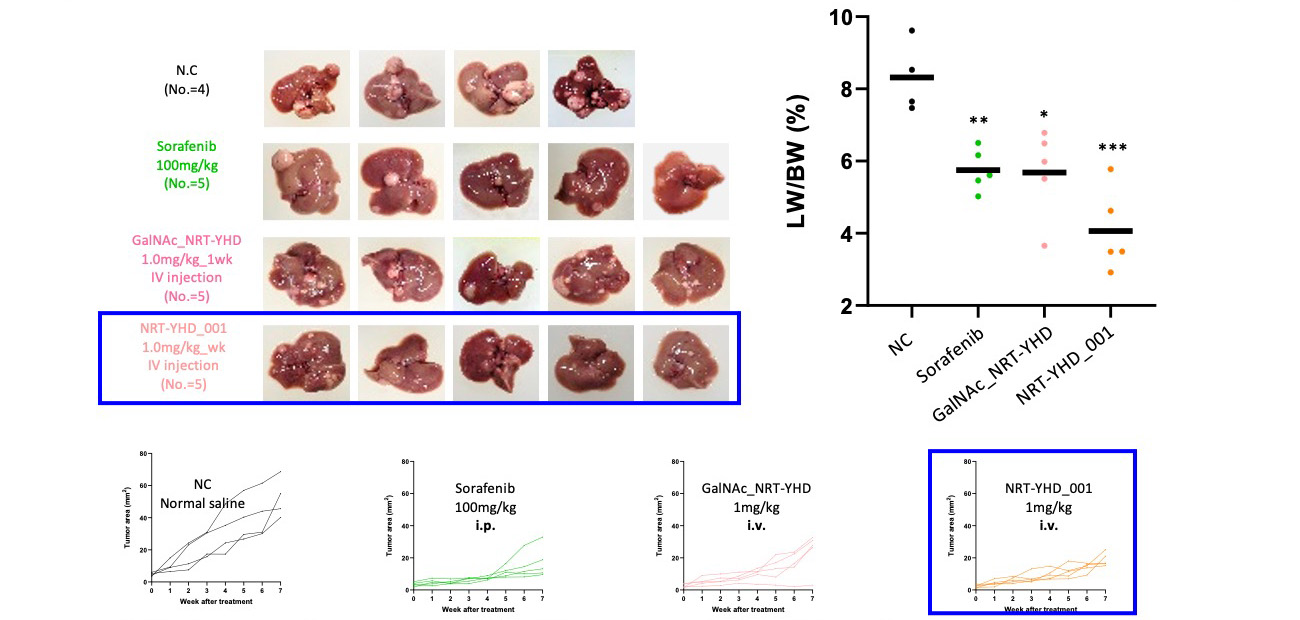
Highest decrease in liver weight/ body weight ratio
In vivo Therapeutic Efficacy Test, Biweekly Injection
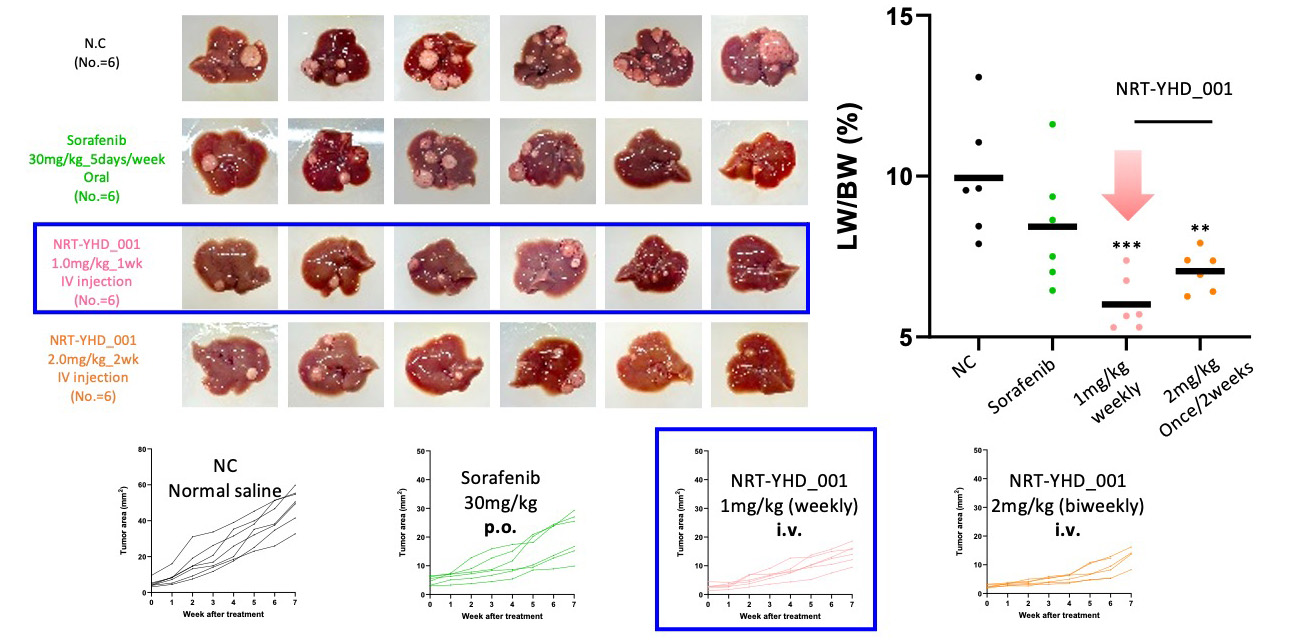
Highest decrease in tumor area
Therapeutic Efficacy Xenograft model survival Test
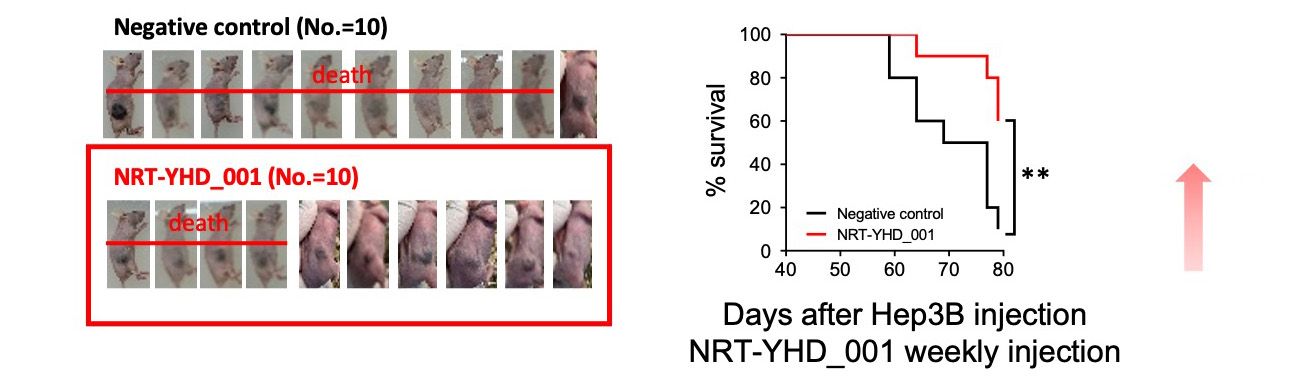
50% increase in survival rate compared to the negative control
Indication & Competitiveness
-
- BCLC B:
- intermediate stage
- BCLC C:
- advanced stage
Target patients : BCLC (Barcelona Clinic Liver Cancer) B and C - patients who cannot receive surgery or have experienced a recurrence of liver cancer after receiving conventional treatments. -
NRT-YHD_001 is the one and only microphage immune-check point inhibitor in liver cancer therapeutics
-
It is anticipated to have significant synergy with combination therapies based on its mechanism of action.
-
Excellent safety profile in preliminary toxicity studies
Unmet Medical Needs
- Poor prognosis : The 5-year relative survival rate is less than 40%, indicating a very poor prognosis.
- Advancements with first-line immunotherapy : The approval of immune checkpoint inhibitors as a first-line therapy has significantly improved efficacy. However, challenges persist with an objective response rate of 30% and diminished effectiveness in patients with PD-L1 expression below 1% or those without a history of viral hepatitis.
- Limitations of immunotherapy : Notably, there is a lower response rate in patients with PD-L1 expression below 1% or those without a history of viral hepatitis, highlighting a challenge in achieving effectiveness with immunotherapy in certain patient subgroups.
2. NRT-YHD_002 : RNA agent for Lung cancer with RNA preparation with anticancer activity of NRT-YHD
NRT-YHD_002 is an RNA lung cancer treatment pipeline with the mechanism of NRT-YHD, confirmed to be useful in lung cancer by big data analysis. NRT-YHD_002 confirmed in a human lung cancer cell line for increased TSP1 and activates macrophages and growth inhibition. in vivo validation, we plan to develop the first macrophage immune checkpoint inhibitor an anticancer drug for lung cancer.